For weeks, the conversation around India’s next ODI generation has revolved around Vaibhav Sooryavanshi.
A 15-year-old who tore through IPL attacks at a staggering strike rate naturally carries attention wherever he goes. When India A walked out against Sri Lanka A in Dambulla on Tuesday, many eyes were fixed on what Sooryavanshi would do next.
What unfolded instead was a reminder of what ODI cricket still demands. The conditions in Dambulla were nothing like the batting surfaces that defined much of IPL 2026. The pitch was slower. The ball held up. Timing was not automatic. Strokeplay required patience rather than power.
India A discovered that quickly. By the 13th over, they were 69/3. Sooryavanshi had fallen for 14 from 12 balls. Priyansh Arya was back in the pavilion. The innings needed stabilising far more than it needed acceleration.
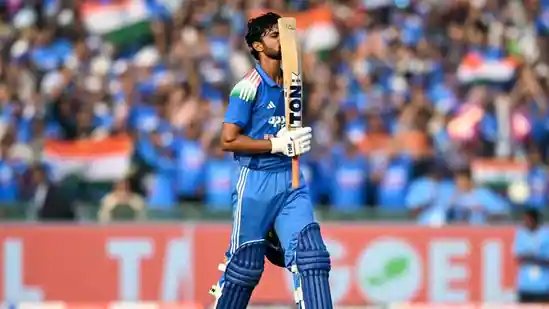
That was when Ruturaj Gaikwad produced the innings the situation demanded. His 101 from 114 balls will not generate the same social media highlights as a whirlwind IPL fifty. It was something more valuable. It was a measured 50-overs hundred built around reading conditions correctly.
Ruturaj Gaikwad realised that the surface was not conducive to easy strokeplay. Rather than forcing the pace, he focused on occupation. He rotated strike, punished loose deliveries and ensured India A never suffered another collapse.
The partnership with Tilak Varma became the foundation of the match. While the scoreboard may show a strike rate of 88.59, the innings itself showed something increasingly rare in modern white-ball cricket: the willingness to play the game that conditions demand rather than the game modern trends encourage.
India’s white-ball pipeline is producing more attacking batters than ever before. Players are arriving with higher strike rates, broader scoring areas and greater confidence against pace and spin alike. Yet ODI cricket continues to reward another skill as well: adaptability.
The best ODI batters are not those who attack in every situation. They are those who recognise when an attack is required and when survival becomes the first priority.
Dambulla was a test of that skill. Sri Lanka A almost chased the target despite never having a centurion. Four batters crossed 45. They stayed in the contest throughout. Yet when the pressure moments arrived, India A had the advantage of a player who had already done the hard work of constructing an innings.
That player was Gaikwad. The story of the day may have begun with the excitement surrounding Vaibhav Sooryavanshi. The lesson came from the batter at the other end of the age spectrum.
One player arrived carrying the buzz of the future. The other delivered a timely reminder of what still wins ODI matches. And nothing could have been better than doing it in front of Ajit Agarkar, the Chief of the BCCI men’s selection committee, who was present at the stadium watching the game.