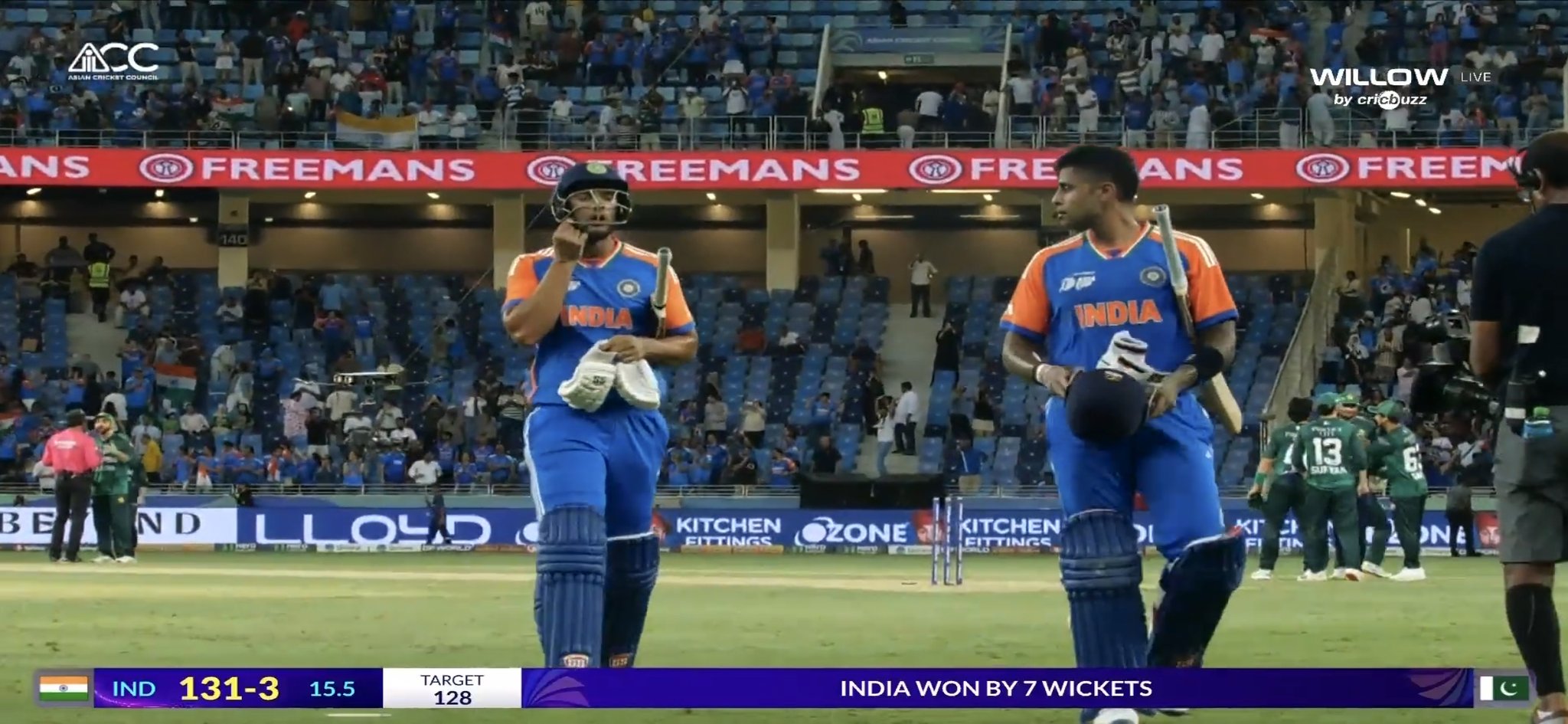
Spinners Power India to Win Over Pakistan in Asia Cup
Pak Vs India : The Asia Cup has always been one of the most anticipated cricketing tournaments in the subcontinent, and when India and Pakistan meet on this stage, the clash takes on the aura of a festival. Cricket lovers across the globe tune in to witness the age-old rivalry that transcends sport. The latest India-Pakistan encounter in the Asia Cup turned out to be another enthralling contest, where spin bowling became the decisive factor. India’s spinners showcased their brilliance, restricting Pakistan’s batting line-up and powering their team to a memorable victory.

Pak Vs India : The Build-Up to the Clash
Leading into the encounter, both teams were under pressure. India had been working on finding the right balance in their squad, particularly in the bowling department, while Pakistan entered the match with confidence in their fast-bowling attack. Pitches in the subcontinent often favor slower bowlers, but Pakistan’s reliance on pace was challenged by India’s strategy of going in with multiple spin options. The tactical preparation paid off handsomely.
Pak Vs India : Toss and Early Momentum
India won the toss and elected to bat, a decision that surprised many experts given the possibility of dew in the second innings. The opening pair provided a steady start, with the top-order contributing crucial runs. A composed half-century from the Indian skipper laid the foundation, while middle-order contributions ensured the team reached a fighting total of around 260 runs. Though not an imposing score by modern standards, it was competitive on a surface that promised turn.

Pakistan’s pacers bowled with discipline, but the pitch did not offer them the assistance they typically thrive on. Instead, the track began to show signs of slowing down, raising the anticipation for spinners to take center stage in the second innings.
Pakistan’s Response
Chasing 261, Pakistan’s openers started cautiously, respecting the Indian new-ball bowlers. The first 10 overs passed without much damage, but once India introduced spin from both ends, the momentum shifted dramatically.
The first breakthrough came when the experienced off-spinner deceived the opener with flight and drift, luring him into a mistimed lofted shot that landed safely in the hands of long-on. From that moment, India tightened the screws. Every over from the spinners created pressure, with runs drying up and dot balls mounting.
Spin Web in the Middle Overs
The middle overs turned out to be the decisive phase of the match. India’s spin duo – the left-arm orthodox and the leg-spinner – bowled in tandem and trapped Pakistan in a web of uncertainty.
The left-arm spinner targeted the stumps, varying his pace cleverly and forcing batsmen into defensive shells.
The leg-spinner, on the other hand, attacked with guile, tossing the ball up and getting sharp turn. His variations, including the googly, proved too difficult for the Pakistani middle-order to negotiate.
One after another, Pakistan’s key batsmen fell while attempting to break free from the stranglehold. The scoreboard pressure kept rising, and with every dot ball, frustration mounted.
Game-Changing Spells
The turning point came in the 25th over when Pakistan’s star batsman was undone by a sharply turning delivery that crashed into his off stump. This wicket silenced Pakistan’s hopes of anchoring the innings. Another crucial breakthrough followed when a well-set batsman attempted a slog sweep against the leg-spinner, only to top-edge the ball into the waiting hands of short fine-leg.
The spinners bowled unchanged for nearly 20 overs, sharing seven wickets between them. Their combined figures read like a dream: miserly economy rates, sharp turn, and relentless accuracy. The Pakistani batsmen had no answers.
Lower Order Collapse
With the top and middle order dismantled, the responsibility fell on Pakistan’s lower order. However, the pressure was too much to handle. Attempting to counterattack, the tailenders perished quickly. A sharp stumping by India’s wicketkeeper highlighted the effectiveness of spin once again. Within a span of five overs, Pakistan lost their last three wickets, folding for 185 runs – well short of the target.
India’s Spin Masterclass
This match will be remembered as a masterclass in spin bowling. While Pakistan had banked on their formidable pace attack, India’s decision to rely on spinners was vindicated. The variety in India’s spin arsenal – off-spin, left-arm orthodox, and leg-spin – offered a complete package that exploited the conditions perfectly.
The tactical brilliance lay in how the spinners were rotated. The captain ensured that no batsman got comfortable against one particular bowler, mixing up ends and varying the field placements. The close-in fielders played their part too, creating constant pressure with sharp reflexes and energy.
Individual Brilliance
The Off-Spinner: His control in the powerplay set the tone, breaking the opening stand and keeping the scoring rate in check.
The Left-Arm Spinner: His ability to bowl wicket-to-wicket forced mistakes and claimed crucial wickets in the middle overs.
The Leg-Spinner: The star of the night, he provided the X-factor with attacking bowling, scalping three key batsmen. His confidence to toss the ball up under pressure was commendable.
Together, they reminded the cricketing world of the golden era of Indian spin, where matches were often won through skillful slow bowling.
Pakistan’s Struggles
Pakistan’s batting line-up looked unsettled against quality spin. Their traditional strength against spin was missing, as batsmen failed to rotate strike and relied heavily on big shots to release pressure. The inability to build partnerships proved costly. Moreover, their lack of a specialist spin option in the playing XI backfired, as the conditions cried out for slow bowlers.
The Bigger Picture
India’s win over Pakistan is more than just another victory in the Asia Cup; it sends a strong message ahead of the upcoming World Cup. The match highlighted the importance of adaptability in cricket. While pace often dominates headlines, spin remains a decisive weapon in the subcontinent.
For India, this victory boosts confidence, showing that the team can rely on spinners to win high-pressure encounters. For Pakistan, it serves as a wake-up call to strengthen their spin resources and rethink their approach on turning tracks.
Fans and Atmosphere
The stadium atmosphere was electric, with fans from both nations creating a sea of flags and chants. Every wicket by the spinners was greeted with thunderous cheers, and the rivalry spirit was alive throughout the match. Social media exploded with celebrations from Indian fans, praising the spinners for reviving the old tradition of “spin to win.”
Conclusion
India’s victory over Pakistan in the Asia Cup was not just about runs and wickets; it was about strategy, execution, and belief. By trusting their spinners, India turned a modest total into a match-winning one. The trio of spinners outplayed Pakistan’s batting unit and showcased the art of spin bowling at its finest.
This encounter will be remembered as a textbook example of how spinners can dominate even in modern-day cricket. More importantly, it reaffirmed India’s strength in nurturing world-class spin talent. As the tournament progresses, this win will serve as a confidence booster and a reminder that in the subcontinent, spin continues to be the ultimate game-changer.