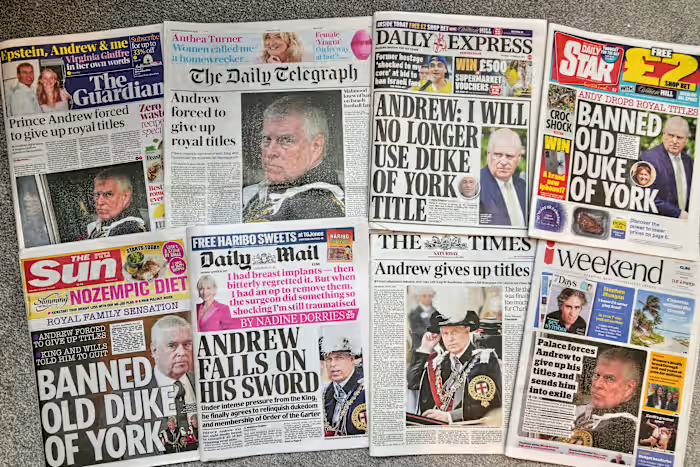
A Royal Resignation The controversy surrounding Prince Andrew has its roots in serious allegations made by Virginia Giuffre, who accused him of sexual misconduct. These claims, which surfaced publicly in 2011, gained significant attention and scrutiny over the ensuing years. Giuffre alleges that she was trafficked by Jeffrey Epstein, a convicted sex offender, and that Prince Andrew engaged in sexual acts with her when she was a minor, which he has categorically denied.
A timeline of key events illustrates the gradual escalation of this controversy. In 2015, Giuffre first publicly accused Prince Andrew in a court filing related to Epstein’s case. The allegations continued to gain traction, prompting Prince Andrew to conduct a widely criticized television interview in November 2019. During this interview, he expressed a lack of recollection regarding Giuffre and maintained that he had never met her, despite photographic evidence suggesting otherwise.
The fallout from this interview was immediate. The public and media scrutiny intensified, leading to significant backlash against the prince, including resignations and distancing from various charitable organizations affiliated with him. His royal duties dwindled as he stepped back from public life, and in early 2022, a U.S. district judge ruled that Giuffre’s claim against the prince could proceed to trial, further complicating his situation.
As the legal battles unfolded, the implications for Prince Andrew became clear. The pressure mounted, with increasing demands for him to address the allegations more definitively. Ultimately, these events culminated in his decision to relinquish his royal titles in early 2022, marking a significant turning point in a saga defined by controversy, legal struggles, and public scrutiny. Understanding this background is crucial to grasping the full impact of Prince Andrew’s resignation from his royal duties.
The Response from Virginia Giuffre and Her Family
A Royal Resignation Virginia Giuffre and her family welcomed Prince Andrew’s decision to surrender his royal title as a significant victory for victims of sexual abuse. For Giuffre, this moment serves as a public acknowledgment of the suffering endured by countless individuals who have been marginalized and silenced. Her family expressed a profound sense of relief, viewing the resignation not merely as a personal triumph but as a crucial step toward broader recognition of the issues surrounding sexual abuse. They asserted that this development sends a clear message to survivors that their voices matter and can instigate meaningful change.
The response from Giuffre and her family underscores their unwavering commitment to raising awareness about the plight of abuse victims. Following the announcement, they reaffirmed their dedication to advocacy, indicating plans to collaborate with various organizations aimed at supporting survivors. This focus on empowerment reflects an ongoing effort to encourage other victims to come forward and share their stories, fostering a culture where abuse can no longer be tolerated. Their future endeavors may include public speaking engagements, community outreach, and participation in legislative initiatives aimed at enhancing protections for survivors.
Moreover, Giuffre’s family emphasized the importance of reforming societal perceptions surrounding sexual abuse. They believe that by addressing these deep-seated issues, further progress can be made in combating the stigma that often accompanies such revelations. Their sentiments resonate with many survivors who have felt a similarly profound sense of isolation and shame. As advocates for change, they hope Prince Andrew’s resignation will pave the way for more victims to seek justice without fear of ridicule or disbelief. Overall, the Giuffre family’s response marks a pivotal moment in the ongoing discourse regarding sexual abuse and victim advocacy.
Implications for the British Royal Family
A Royal Resignation The resignation of Prince Andrew from his royal titles marks a significant moment for the British Royal Family, with potential ramifications that extend beyond individual reputations. One of the most immediate consequences is the shift in public perception of the monarchy. Historically, the royal family has been viewed with a mixture of admiration and criticism. However, this recent development may further polarize public opinion, with some segments expressing relief at the action taken, while others may view it as an inadequacy to truly address systemic issues within the institution.
A Royal Resignation The impact on the monarchy’s reputation cannot be understated. The royal family has long been seen as a symbol of continuity and stability within the United Kingdom; yet, Prince Andrew’s associations and conduct have raised questions about the integrity of that image. His resignation may help to alleviate some of the scrutiny directed toward the monarchy, but it also exposes underlying vulnerabilities that could affect future engagement with the public. The monarchy must work diligently to restore trust and ensure that similar situations do not tarnish its reputation again.
Regarding changes within royal protocols, there is likely to be a reevaluation of how the family addresses allegations of misconduct and behavior among its members. This incident may catalyze a more proactive approach to handling allegations, fostering transparency and accountability to mitigate future crises. The royal family could implement more stringent guidelines for members, prioritizing ethical conduct to regain public confidence. In the long run, how the royal family navigates these sensitive issues will determine its resilience and relevance in the modern era.
What Lies Ahead for Prince Andrew
Following Prince Andrew’s decision to resign from his royal titles, a range of implications unfold that will shape his future. Initially, the abdication from royal duties presents a pivotal moment for the Duke of York, prompting a need for reevaluation of his public identity and potential career trajectories. Traditionally, members of the royal family transition to roles that align with charitable engagements or public service; however, Andrew’s circumstances may differentiate him from this norm.
As Prince Andrew navigates his post-royal life, it is likely that he will encounter challenges pertaining to public appearances and rehabilitation of his image. The reluctance of various organizations and charities to associate with him could hinder his possibilities for meaningful engagement within these sectors. Attempting to repair a tarnished reputation while distancing himself from the allegations that prompted his resignation will be a delicate balancing act. Public perception will play a critical role in any potential comeback, and he may focus on finding avenues where he can contribute without drawing excessive scrutiny.
Moreover, unresolved legal complications remain a significant factor in Andrew’s future. Although he has stepped back from royal duties, the legal implications stemming from past allegations could affect his mobility and opportunities. He must navigate these legal hurdles proactively, as lingering legal matters could impede any positive strides toward career reinvention.