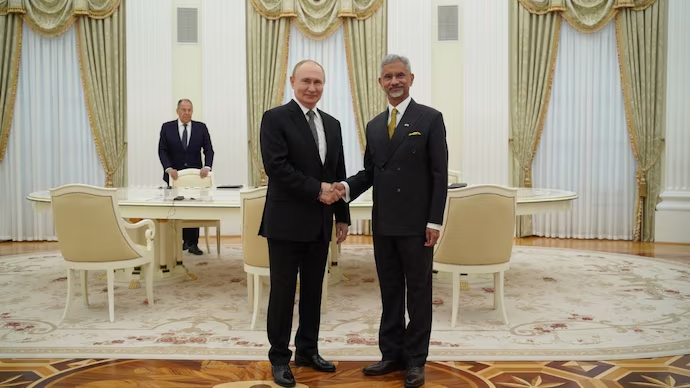
S Jaishankar meets Russian President Vladimir Putin in Moscow, underscoring New Delhi’s efforts to maintain strong diplomatic and strategic ties with Moscow amid global geopolitical turbulence. The high-profile meeting comes at a time when both countries are navigating challenges posed by the Russia–Ukraine conflict, Western sanctions, and shifting global alliances.
Warm Welcome from Kremlin : S Jaishankar meets Russian President
President Putin warmly received Minister Jaishankar at the Kremlin, praising India’s consistent and independent foreign policy. He reiterated Russia’s commitment to deepening its strategic partnership with India, spanning areas such as defense, energy, trade, and technology.
“India is one of our most trusted friends. Our cooperation has stood the test of time, and we are determined to expand it further,” Putin said, according to reports from Russian state media.
Jaishankar Highlights Bilateral Cooperation : S Jaishankar meets Russian President
During the meeting, Jaishankar conveyed Prime Minister Narendra Modi’s greetings to President Putin and emphasized that the India–Russia relationship remains a cornerstone of New Delhi’s foreign policy.
He highlighted the following areas of collaboration:
-
Energy Security: India’s imports of Russian crude oil have surged despite Western pressure, ensuring affordable energy supplies for Indian markets.
-
Defense Partnership: The long-standing defense cooperation, including joint projects like BrahMos missiles and potential agreements for new fighter jets and helicopters.
-
Trade Expansion: Bilateral trade crossed $65 billion in 2024, driven by energy, fertilizers, and defense supplies. Both leaders stressed the need to balance trade by boosting Indian exports to Russia.
-
Education & Culture: Increasing opportunities for Indian students in Russia, and cultural exchanges to strengthen people-to-people ties.
Ukraine War & Global Diplomacy
The meeting also touched upon the ongoing Russia–Ukraine conflict. While India has maintained a neutral stance, calling for dialogue and diplomacy, Jaishankar reiterated that India supports peace negotiations and opposes escalation.
Analysts say Jaishankar’s Moscow visit highlights India’s strategic balancing act — keeping ties with Russia intact while simultaneously strengthening partnerships with the US, EU, and Indo-Pacific allies. S Jaishankar meets Russian President
Energy and Oil Trade in Focus
Russia has emerged as one of India’s largest oil suppliers in the past two years, offering crude at discounted rates amid Western sanctions. This cooperation has been a lifeline for India’s energy security.
Jaishankar stressed that long-term energy agreements, including nuclear energy collaboration at Kudankulam and exploration of renewable opportunities, must be accelerated.
Defense Cooperation Remains Strong
Despite diversification of arms imports from the US, France, and Israel, India continues to rely heavily on Russia for defense equipment and spare parts. Discussions reportedly included:
-
Supply of S-400 air defense systems.
-
Future prospects of joint helicopter and submarine development.
-
Ensuring uninterrupted delivery of spare parts and maintenance support.
Geopolitical Implications
Experts believe this meeting has broader global implications. As Western nations attempt to isolate Moscow, India’s continued engagement with Russia provides Putin with an important diplomatic win.
At the same time, India benefits from keeping a strong relationship with Russia, which has historically supported New Delhi at the UN Security Council and provided critical defense and energy support.
“India is walking a fine line. By engaging Russia, New Delhi is ensuring that its strategic autonomy is preserved, even as it deepens ties with Western partners,” said a former diplomat.
Conclusion
S Jaishankar’s meeting with Vladimir Putin reflects the enduring strength of the India–Russia strategic partnership. From energy and defense to global diplomacy, both nations reaffirmed their intent to keep ties strong despite global headwinds.
As Jaishankar put it:
“Our relationship is unique, time-tested, and built on trust. We are committed to working together for mutual benefit and global stability.”
With the world watching closely, the outcome of this engagement could shape India’s role as a balancing power in the evolving global order.