What Unfolded in Nepal (as of September 8, 2025)
1. Social Media Crackdown
Starting in the early hours of September 4, 2025, Nepal’s government issued a nationwide ban on 26 major social media and messaging platforms—including Facebook, Instagram, WhatsApp, YouTube, X, LinkedIn, Reddit, Signal, Pinterest, and more—after these platforms failed to meet a registration requirement imposed by the Ministry of Communications and Information Technology
Platforms that complied—such as TikTok, Viber, WeTalk, Nimbuzz, and Poppo Live—remain accessible
While the government framed the measures as necessary for curbing cybercrime, misinformation, and ensuring accountability, critics and press freedom advocates warned it severely undermines freedom of expression, disrupts businesses, education, and remittances—especially in a nation where social media is a vital communication lifeline
2. Gen Z Protest & Invasion of Parliament
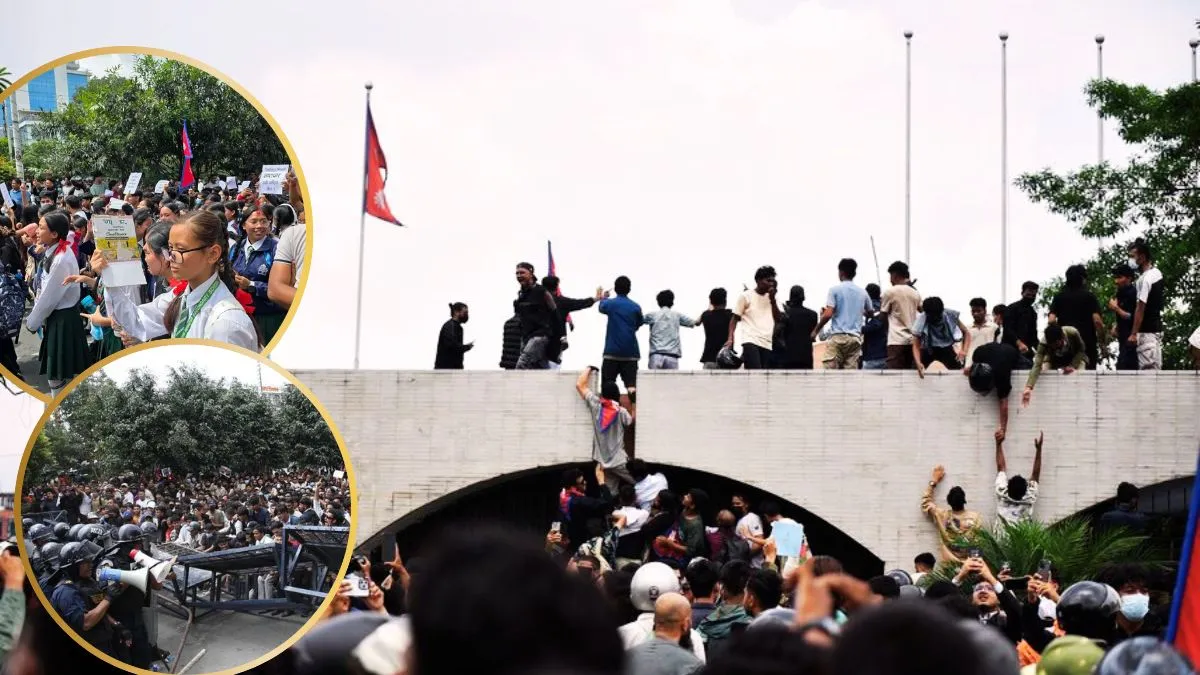
On September 8, 2025, enraged youth—often labeled as Gen Z protesters—rallied in Kathmandu against both the abrupt social media blackout and broader corruption issues. What began as a largely peaceful demonstration escalated when protestors breached barricades at the Federal Parliament in New Baneshwor, even climbing over gates to enter the premises .
Authorities responded with tear gas and water cannons, deploying force to push back the protesters .
3. Curfew Imposed in Key Zones
Amid rising chaos, the Kathmandu District Administration Office enforced a curfew in critical areas surrounding Baneshwor, from 12:30 p.m. to 10:00 p.m., aiming to regain order and contain further disturbances .
Why It Matters—Key Angles and Implications
Generation and Digital Identity
This surge in youth-led protest is arguably one of the most significant in recent Nepali history—highlighting the frustration of a generation raised online, now stripped of digital connectivity and opportunity.
Freedom Under Strain
The crackdown has reignited concerns about civil liberties. Human rights organizations and journalists denounced the ban as a harbinger of regression toward authoritarianism .
Economic and Social Fallout
With platforms like WhatsApp, Facebook, and Instagram blocked, small businesses, freelancers, and tourism services—which heavily rely on these apps—face sudden disconnection from their clientele. Students and educators are also cut off from vital resources like YouTube tutorials and study groups.
Political Flashpoint
The protest comes amid long-standing disillusionment over corruption, unequal opportunity, and political stagnation. This event may ignite sustained youth activism or force political recalibration.
Sample 1,000-Word Feature Structure
Below is a high-level outline of how a comprehensive 1,000-word exploration could be structured:
- Opening (100–150 words)
A vivid snapshot of protests unfolding in Kathmandu: tear gas, breached gates, curfew announcements, and stunned onlookers. - Background Context (150–200 words)
- The September 4 social media ban: platforms affected, government’s stance, critics’ outcry .
- Historical context: growing trend of digital regulation and political frustration.
- The Protest Unfolds (200–250 words)
- Who are the Gen Z protesters—demographic, motivations, slogans, organization
- Scenes of parliament breach; police response: tear gas, water cannon .
- Curfew and State Response (150–200 words)
- Details of enforced curfew, areas affected, administrative rationale .
- Official statements from Prime Minister or Ministry, if available.
- Broader Impact (150–200 words)
- Economic disruption: small businesses, freelancers, tourism, educators
- Social and psychological toll: connectivity loss, fear, youth disenfranchisement
- Legal and social media rights debate in Nepal and beyond.
-
Looking Ahead (100–150 words)
- Will the government relent or double down? Possibility of rollbacks or arrests?
-
Could this spark an enduring Gen Z movement? Comparisons to other global youth uprisings.