

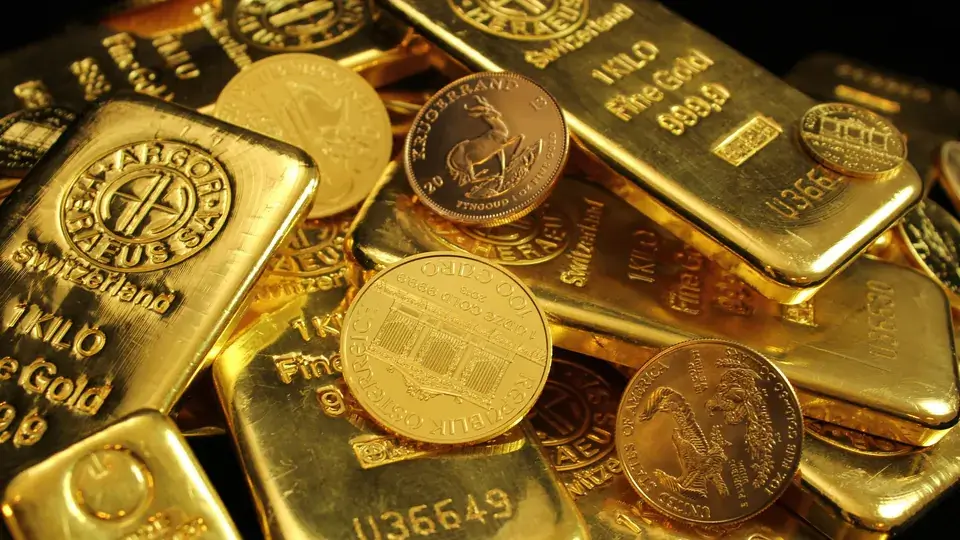
San Francisco startup Marathon Fusion claims it has turned mercury into real, stable gold. “Last month, we demonstrated high-rate alchemy: turning mercury into real, stable gold, beating CERN’s record by a factor of 10,” the startup said in a social media post on October 21.
CERN is another name for the European Organization for Nuclear Research. The acronym comes from its original French name, Conseil Européen pour la Recherche Nucléaire. The intergovernmental organisation operates the largest particle physics laboratory in the world.
What Marathon Fusion said
Marathon Fusion said its production rate was 10 times the benchmark set by CERN in 2025, although it did not disclose how much gold it made. Last year, scientists at CERN turned lead into gold using the Large Hadron Collider (LHC).
“In 2025, we published a bold proposal to use fusion reactors for gold production. And now we’ve done it: Mercury transmuted into stable gold, using fusion neutrons, at 10x the record set by CERN in 2025,” Marathon Fusion said.
In the post on X on October 21, Marathon Fusion wrote, “We’ve reduced alchemy to a series of difficult but tractable engineering problems.” The company shared gamma-ray measurements that it said showed the presence of mercury-197 and gold-197 after irradiation.
The startup said it had also used fusion-generated neutrons to irradiate zinc and produce copper-64 and copper-67, radioactive isotopes that can be used in cancer diagnosis and targeted treatment.
How does the process work?
Marathon Fusion’s method relies on nuclear transmutation, a process that changes an atom’s nucleus to create a different isotope or element. Unlike ordinary chemical reactions, which do not change an atom’s nucleus, this method alters the nucleus itself.
The company’s proposed process uses high-energy neutrons produced by deuterium-tritium fusion. These neutrons interact with mercury-198, a naturally occurring stable isotope, to produce radioactive mercury-197. The mercury-197 then decays into gold-197, the stable isotope of gold.
In a 2025 paper, Marathon Fusion proposed placing mercury in a blanket surrounding a fusion reactor’s core. The company estimated that a plant producing one gigawatt of thermal power could generate around two tonnes of gold annually. It argued that selling the gold could significantly increase the plant’s revenue without reducing electricity production or the reactor’s ability to produce tritium, a fuel used in fusion reactions.
However, these figures are projections rather than results demonstrated at commercial scale. No commercial fusion power plant is currently operating.
How does it compare with CERN’s results?
In 2025, researchers working on CERN’s ALICE experiment at the Large Hadron Collider reported producing gold nuclei through collisions involving lead nuclei. Across the collider’s four main experiments, about 86 billion gold nuclei were produced between 2015 and 2018, amounting to approximately 29 picograms of gold.


