In the high-tech, gadget-filled 21st century, you would think global superpowers and massive alliances like NATO, with budgets bigger than the GDP of small countries, could swat away a few drones like flies. But no—apparently, drones have become the Achilles heel of the world’s strongest militaries. And the funniest thing is, the people who invented half of this drone technology are now panicking about how to stop it.
Let’s imagine the scene. Somewhere in Brussels, inside NATO headquarters, generals and officials are huddled around a polished wooden table. Coffee cups, maps, and half-eaten croissants are scattered everywhere. One general clears his throat and says dramatically:
“Gentlemen, we have a problem. Russia is sending drones again.”
The room gasps. Someone drops their croissant. Another mutters, “Not again…”
And then the punchline comes from another official:
“But… we don’t know how to stop them.”
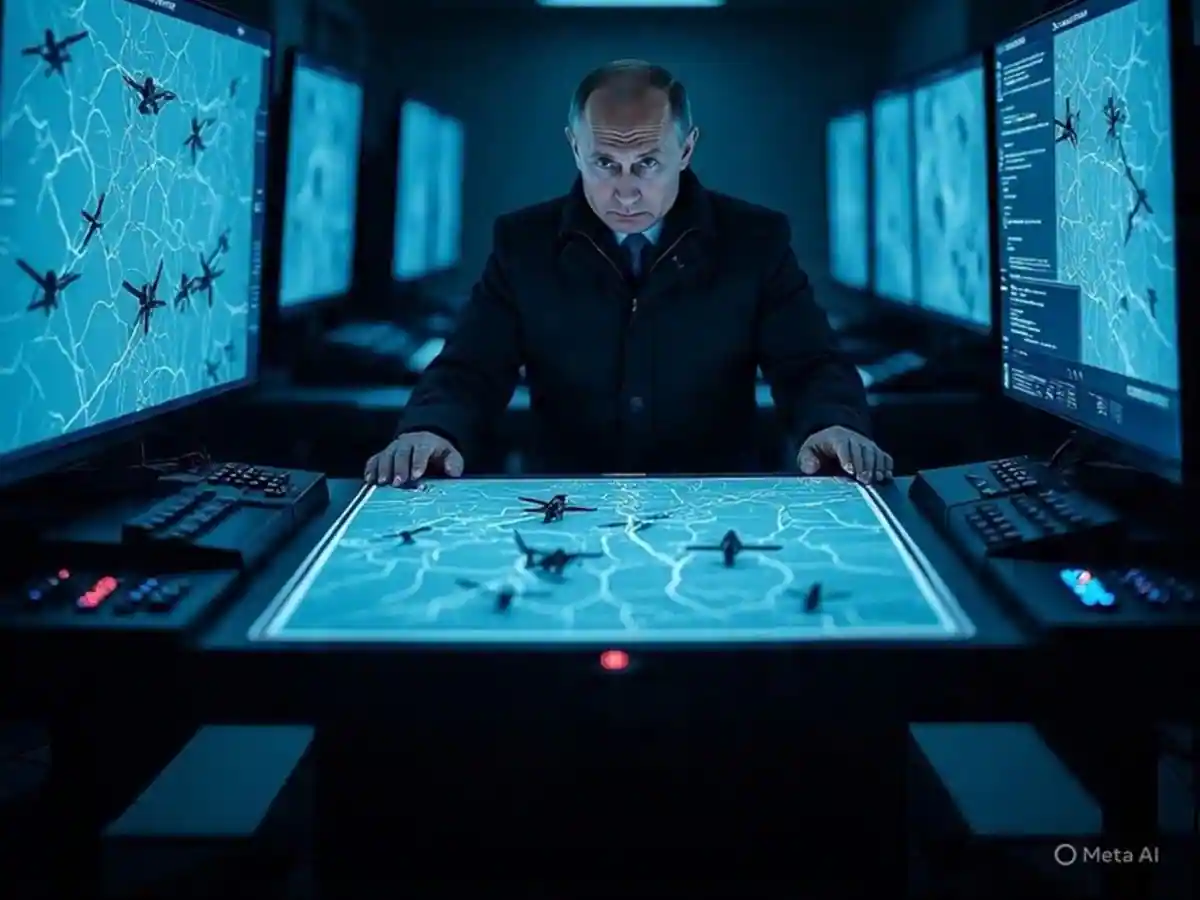
The silence in the room is deafening. After all, these are the people with stealth bombers, hypersonic missiles, nuclear submarines, and tanks that cost more than luxury yachts. Yet, a $500 drone with a GoPro camera strapped to it is enough to make them sweat.
Drones: The Mosquitoes of Modern Warfare
The funny thing about drones is that they’re like mosquitoes. You hear them buzzing, you know they’re coming, but by the time you swat, it’s too late. NATO might be a military giant, but even giants are annoyed by mosquitoes.
Picture a NATO soldier standing guard with the latest machine gun, night-vision goggles, and a communication headset worth thousands of dollars. Then comes a tiny buzzing quadcopter carrying an explosive the size of a soda can. The soldier panics, waves his hands, maybe even throws a helmet at it. Too late.
It’s like bringing a medieval knight in full armor to fight a bee.
Why NATO’s Panic is So Funny
- Budget vs. Toy Shops
NATO spends trillions on defense. Russia, meanwhile, sometimes uses drones that look like they were ordered off AliExpress with free shipping. Imagine a toy-shop gadget giving sleepless nights to men who control nuclear warheads. It’s like a billionaire being defeated by a kid with a slingshot. - Meetings Over Meetings
Instead of just inventing an effective anti-drone flyswatter, NATO holds endless conferences. Picture generals in suits, pointing laser pointers at PowerPoint slides titled “How to Stop Drones, Maybe.” Meanwhile, outside the conference hall, another drone whizzes by happily. - Technology Overload
NATO already has radars, satellites, and artificial intelligence. But drones are too small, too cheap, and too many. One general probably asked, “Can’t we just shoot them down with lasers?” Another replied, “We’re still waiting for the funding approval, sir.”
Russian Creativity, NATO Confusion
The Russians, on the other hand, seem to have mastered the art of improvisation. If NATO is Apple, sleek and expensive, Russia is like that uncle who fixes everything with duct tape.
They take a commercial drone, attach explosives, and boom—suddenly, NATO is writing reports about “serious threats to global stability.” Imagine the NATO secretary scribbling: “Urgent: Drones are scarier than nukes.”
It’s as if Russia figured out the secret: don’t fight NATO with tanks, fight them with buzzing toys.
A Funny Analogy
Think of NATO as a man who has the best home security system: cameras, alarms, armored doors, even a guard dog. But he forgot about mosquitoes. The man lies awake at night, covered in blankets, whispering: “How do I stop the buzzing?”
Now multiply that by 32 member countries, and you get NATO.
What Solutions NATO Might Try (Funny Predictions)
- Giant Bug Zappers
Imagine NATO placing huge electric bug zappers on their borders. Drones approach… zap! Problem solved. But then a general complains about the electricity bill. - Training Birds
Maybe NATO will start training eagles or hawks to attack drones mid-air. Imagine generals holding falcons on their arms, proudly saying, “Behold, our new Air Force.” - Drone vs. Drone Battles
Instead of soldiers, NATO might start using drones to chase other drones. Soon, wars will look like chaotic air shows, with little buzzing machines doing dogfights over cities. - Human Solutions
The cheapest way: give every NATO soldier a tennis racket. Drones incoming? Swing like you’re at Wimbledon. It’s funny, but honestly, it might even work.
The Serious But Still Funny Reality
Behind the humor, the situation shows something ironic. Modern warfare isn’t just about big bombs anymore. It’s about small, cheap, creative tools. Drones have exposed that even the mightiest alliances can be humbled by something that costs less than a new iPhone.
And while NATO panics, civilians on the internet are making memes. One meme shows NATO generals hiding under a table from a tiny toy drone. Another shows a kid flying a drone in his backyard with the caption: “NATO’s worst nightmare.”
The “Funny Thing” About Power
The real funny thing is how the definition of power changes. In the Cold War, power meant nuclear arsenals. In the Gulf War, it meant stealth bombers. Today? It might just mean who can mass-produce cheap drones the fastest.
NATO has the power of money and machines. Russia, facing sanctions and shortages, uses creativity and low-cost improvisation. And creativity often wins against overthinking.
It’s almost like a comedy movie: the overconfident strongman slips on a banana peel thrown by the underdog.
What’s Next?
If NATO keeps saying, “We can’t handle drone attacks,” the future might look hilarious:
- NATO meetings will start with mosquito repellent sprays.
- Generals will wear helmets indoors “just in case.”
- Defense budgets will be spent on companies making plastic propellers.
- Future war memorials will have statues of… drones.
And if things get really absurd, the Nobel Peace Prize might one day go to the inventor of the ultimate drone-swatting device.
Conclusion
NATO’s admission that it struggles with drones is both worrying and comical. It shows how the balance of power can shift with technology, but it also highlights the irony of superpowers undone by buzzing toys.
Yes, drones are dangerous. Yes, they can change battlefields. But the funny thing is how a trillion-dollar alliance is running around like someone chasing a fly in their kitchen with a rolled-up newspaper.
So the next time you see a child playing with a drone in the park, remember: somewhere, in a high-level NATO meeting, a general might be saying, “We are not capable of handling this.”