Pak Woman Who Came to India in 1956 has been found on the Bihar voter list, sparking fresh controversy at a time when the Statutory Investigation Report (SIR) is already dominating political and social debates. The incident has raised critical questions about documentation, voter identity verification, and electoral accountability in India.
The Discovery : Pak Woman Who Came to India in 1956
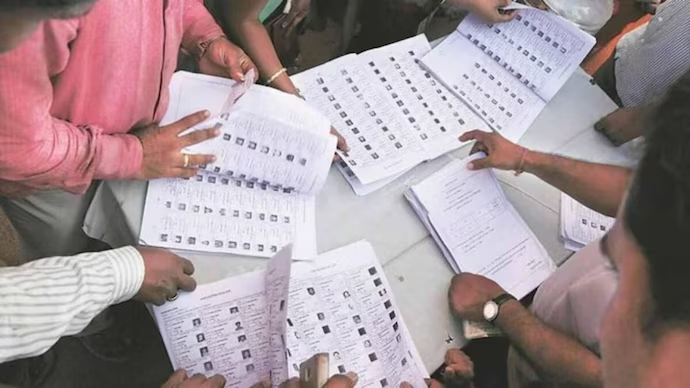
Officials conducting voter roll revision in Bihar’s Sitamarhi district stumbled upon the entry of a woman who, according to records, had crossed over from Pakistan to India during the mid-1950s. Her name, listed on the electoral rolls, has now triggered inquiries into how she was enrolled despite questions around her nationality status.
Preliminary reports suggest that the woman, now in her late 80s, has been a resident of Bihar for decades, living with her family and participating in community activities. Her inclusion in the electoral list appears to have gone unnoticed until recently.
Political Reactions : Pak Woman Who Came to India in 1956
The revelation has ignited a political storm, with opposition leaders alleging that the incident reflects serious lapses in the Election Commission’s verification process.
A senior opposition MLA remarked:
“At a time when the country is witnessing protests and debates around SIR, such incidents expose the flaws in our voter enrollment system. How can someone with disputed nationality find a place in the electoral rolls for decades?”
Meanwhile, ruling party leaders defended the administration, stating that the matter should be viewed in historical context, as the woman entered India during an era when migration rules were less stringent.
Link with SIR Debate : Pak Woman Who Came to India in 1956
The controversy comes amid heated protests against the Statutory Investigation Report (SIR), which many groups claim could disenfranchise genuine citizens due to strict verification measures. The discovery of this voter case has added a new layer to the debate:
Supporters of SIR argue that it justifies the need for stricter checks to avoid irregularities.
Opponents of SIR highlight that ordinary residents who have lived in India for decades could face harassment under the same rules.
Local Response
Residents of Sitamarhi expressed mixed reactions. Some believe the woman, who has been living in India for nearly seven decades, should not face harassment at this stage of her life. Others feel that her case should be an example for authorities to tighten loopholes in the voter registration process.
A local villager said:
“She has been part of our community for years. Everyone knows her. It is unfair to suddenly question her nationality now.”
Election Commission’s Stand
The Election Commission of India (ECI) has ordered a detailed inquiry into the matter. Officials have stated that while the woman may have crossed over before stricter immigration laws came into force, her inclusion in the voter list must be legally verified.
An ECI official told reporters:
“We are investigating whether her name was added following proper procedure or due to oversight. A final decision will be taken once all documents are reviewed.”
Historical Context
The woman reportedly migrated during the post-partition migration waves in the 1950s, when several families moved between India and Pakistan due to social, cultural, and political reasons. Experts argue that many such individuals, who have been long-time residents, may not have clear citizenship documentation even today. Pak Woman Who Came to India in 1956
Expert Opinions
Political analysts believe this case underlines the complexities of citizenship and identity in India.
Dr. R. Sharma, a political scientist, observed:
“This is not just about one woman’s name on a voter list. It reflects deeper issues around how India deals with historical migration, identity verification, and the rights of long-term residents.” Pak Woman Who Came to India in 1956
Conclusion
The case of the Pakistani woman found on the Bihar voter list has quickly become a flashpoint in the ongoing SIR controversy. It highlights the urgent need for transparent, fair, and humane verification systems that can balance national security concerns with the rights of individuals who have been part of Indian society for decades.
As inquiries continue, the outcome will be closely watched—not just in Bihar, but across the country—since it may set an important precedent for how India navigates the intersection of citizenship, migration, and democracy. Pak Woman Who Came to India in 1956